
How to Plant Your Native Seeds
Join us at the 2026 Climate-Friendly Garden Tour and see the seeds in your seed packet come to life in local gardens!
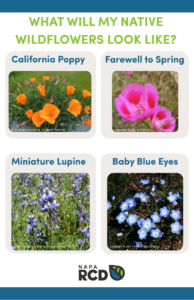
Eschscholzia californica, California Poppy;
Clarkia amoena, Farewell-to-Spring;
Lupinus bicolor, Miniature Lupine;
Nemophila menziesii, Baby-Blue-Eyes; and the Native Wildflower Mix
All seeds were purchased through Larner’s Seeds, and pieces of this guide were taken from their website.
Lifecycle of an Annual Wildflower (simplified):
1. Seed germinates with the fall and winter rains (or the gardener’s irrigation)
2. Roots and basal leaves grow through the winter
3. Plants come into bloom from early spring to late summer
4. Flowers ripen into seed through late spring, summer and fall
5. The “annual” cycle is complete and begins again
This cycle can be manipulated by planting earlier or later and providing water by either irrigation or hand watering. Do not thin plants; in nature they grow closely together, which encourages bloom.
Traditional Planting Time:
Traditional planting time is October through February, but wildflowers are adaptable to many different planting regimes, and there is a broad planting window the further west you move. Seeds planted in the spring after rains are past will require irrigation or hand watering until the seeds have germinated and made early growth. Some afternoon shade is helpful for late-season sowings.
Planting Tips:
These seeds can be broadcast planted- in other words, just sprinkle them out in the area you want them to grow! We (and our native pollinators!) like it best when you have a mix of colors and species, and you can absolutely mix a couple of seed packets of flowers you got from Napa RCD together before you broadcast them over an area of your garden.
If a little bit of chaos isn’t your thing, that’s okay! Some gardeners plant their seeds in flats or pots, where the environment can be controlled, then transplant the wildflowers into their garden during the planting season. This is also a way to find out which plants will do best in which spot without throwing all of your seeds in one space.
Weeding: A critical factor in reintroducing annual wildflowers is weed control. If the native wildflowers could out-compete weedy species, we would still have hills covered in wildflowers instead of invasive grasses. Like all annual seeds, wildflowers require good soil with firm seed to soil contact, consistent moisture, and few weeds.
A frequently asked question is: Should I plant on top of or underneath the mulch?
If you are mulching with wood chips, pull the chips aside and plant directly into the soil underneath—do not plant into the mulch itself. After planting, you can return the wood chips around the planted area. Wood chips help retain moisture and suppress weeds. Cover seeds with soil to a depth of about twice their diameter. Gently press or roll the soil surface to ensure good contact between the seeds and the soil. Water thoroughly after planting. Most annual seeds will germinate within 10 days to 3 weeks.
With questions, contact Ashley@NapaRCD.org